
A Beginner's Guide to Understanding Abstract Art Movements
The essence of abstract art lies in its departure from the conventional, embracing a non-representational approach that opens up new avenues for artistic expression. Abstract art is not about depicting the world in a realistic manner; instead, it's about exploring the emotional and expressive qua...

22 min read
Exploring the world of abstract styles can be a fascinating journey, especially for those new to the genre. **
Abstract art movements** have significantly influenced modern art, introducing a wide range of creative expressions.
The diverse styles within abstract art have evolved over time, shaped by various cultural and historical contexts. Understanding these styles is key to appreciating the complexity and richness of modern art.
Key Takeaways
- Abstract styles have transformed the modern art landscape.
- Various movements have contributed to the evolution of abstract art.
- Understanding these movements enhances appreciation of modern art.
- Abstract art continues to influence contemporary artists.
- The diversity within abstract styles reflects broader cultural shifts.
The Essence of Abstract Art
The essence of abstract art lies in its departure from the conventional, embracing a non-representational approach that opens up new avenues for artistic expression. Abstract art is not about depicting the world in a realistic manner; instead, it’s about exploring the emotional and expressive qualities of art.
Defining Abstraction in Visual Arts
Abstraction in visual arts refers to the process of simplifying or distorting forms to convey emotions or ideas. This involves using non-representational shapes, colors, and textures to create artworks that are open to interpretation. For a deeper dive into the significance and impact of abstract art, you can explore resources like this guide.
The Departure from Representational Art
The shift from representational to abstract art marked a significant turning point in the history of art. Artists began to move away from traditional techniques, seeking to capture the essence of their subjects rather than their physical appearance. This departure from representation allowed for a more personal and expressive form of art, paving the way for various abstract art movements.
The Historical Context: How Abstract Art Emerged
The emergence of abstract art was a gradual process rooted in the artistic innovations of the late 19th century. As artists began to move away from traditional representational art forms, the groundwork was laid for the development of abstraction.
Late 19th Century Artistic Developments
The late 19th century was a period of significant artistic innovation. **
Impressionism**, led by artists like Claude Monet, focused on capturing light and color, moving away from the traditional approaches to representation. This movement laid the groundwork for further experimentation with form and color.
**
Post-Impressionism** followed, with artists such as Paul Czanne and Vincent van Gogh pushing the boundaries of color and form even further. Their work was characterized by a more personal and expressive use of color and brushwork, which would later influence the development of abstract art.
Early 20th Century Cultural Shifts
The early 20th century saw a series of cultural shifts that further paved the way for abstract art. The **
Fauvist movement**, with its bold and vibrant colors, and **
Cubism**, which fragmented objects into geometric forms, were pivotal. These movements challenged traditional techniques of perspective and representation.
As the century progressed, the influence of non-Western art and the growing interest in primitivism also played a role in shaping abstract art. Artists began to explore new sources of inspiration, leading to a more diverse and innovative art scene.
The convergence of these artistic developments and cultural shifts created a fertile ground for the emergence of abstract art. By understanding this historical context, we can better appreciate the evolution and significance of abstract art movements.
Major Abstract Art Movements Through History
Throughout history, abstract art movements have emerged, transforming the way we perceive and create art. These movements have not only reflected the cultural and societal changes of their times but have also paved the way for future innovations in the art world.
Timeline of Key Movements
The evolution of abstract art can be understood by examining key movements that have shaped its history. Starting with **
Expressionism** in the early 20th century, artists began to emphasize subjective emotional experience. This was followed by **
Abstract Expressionism**, which further pushed the boundaries of abstraction with artists like Jackson Pollock and Willem de Kooning. Other significant movements include **
Cubism**, **
Surrealism**, and **
De Stijl**, each contributing unique elements to the development of abstract art. For a more detailed timeline, you can explore resources like this article, which provides an in-depth look at famous art movements and their defining works.
The timeline of abstract art movements is not strictly linear; different styles often overlapped or emerged in response to one another. Understanding these movements and their chronology is crucial for understanding abstract styles and appreciating the complexity of abstract art.
Geographical Centers of Abstract Innovation
Abstract art movements were not confined to a single geographical location; instead, they flourished in various centers around the world. **
Paris** was a significant hub in the early 20th century, attracting artists from across Europe. The city became a melting pot of different styles and influences, contributing to the development of Cubism and other movements.
In the mid-20th century, **
New York** emerged as a major center for abstract art, particularly with the rise of Abstract Expressionism. The city’s vibrant art scene and the presence of influential artists and critics created a fertile ground for innovation. Other geographical centers, such as **
Moscow** and **
Amsterdam**, also played crucial roles in the development of abstract art movements like Suprematism and De Stijl.
These geographical centers not only fostered the growth of abstract art but also facilitated the exchange of ideas across different regions, contributing to the rich diversity of abstract art movements.
Pioneers of Abstraction
The dawn of abstract art was marked by visionary artists who dared to break free from traditional representation. These pioneers played a crucial role in shaping the history of abstract art and providing a comprehensive overview of abstract art as we understand it today.
The journey into abstraction was led by several key figures, but two names stand out for their significant contributions: Wassily Kandinsky and Kazimir Malevich. Their innovative approaches not only defined their respective movements but also paved the way for future generations of abstract artists.
Wassily Kandinsky and the Birth of Pure Abstraction
Wassily Kandinsky is often credited with creating the first purely abstract works of art. As a Russian painter and art theorist, Kandinsky believed that art should evoke emotions and spiritual experiences rather than represent the physical world. His use of vibrant colors and geometric forms laid the groundwork for pure abstraction.
- Kandinsky’s innovative style was influenced by his interest in music and the emotional potential of color.
- He was a key figure in the development of the **
Bauhaus movement**, which further emphasized the fusion of art, craft, and technology.
Kazimir Malevich and Suprematism
Kazimir Malevich, another influential Russian artist, founded the **
Suprematism** movement. This artistic philosophy focused on geometric forms and the supremacy of pure artistic feeling. Malevich’s most famous work, “Black Square,” symbolized the void or the infinite, marking a radical departure from representational art.
- Malevich’s Suprematism was characterized by its use of simple shapes and a limited color palette.
- The movement had a profound impact on the development of modern art, influencing various avant-garde movements worldwide.
The contributions of Kandinsky and Malevich to the history of abstract art are undeniable. Their pioneering work continues to inspire artists and art enthusiasts alike, offering a rich overview of abstract art that is both complex and profoundly beautiful.
Cubism: Breaking Reality into Geometric Forms
By breaking away from conventional representation, Cubism introduced a new visual language that was both radical and influential. This art movement, pioneered by **
Pablo Picasso** and **
Georges Braque**, challenged traditional techniques of perspective and representation.
Pioneers and Innovations
Pablo Picasso and Georges Braque’s collaborative efforts led to the development of Cubism, a style that redefined modern art. Their innovations were characterized by the fragmentation of objects into geometric shapes, overlapping planes, and a reduced color palette. As noted by art historian John Golding, “Cubism was a ruthless demolition of traditional techniques and conventions.”
“The Cubist artists were not concerned with the representation of reality, but with the creation of a new reality.”
Analytical vs. Synthetic Cubism
Cubism evolved into two distinct phases: Analytical Cubism and Synthetic Cubism. Analytical Cubism involved breaking down objects into their constituent parts, analyzing their structure, and representing them from multiple viewpoints. Synthetic Cubism, on the other hand, involved synthesizing or combining fragmented forms and textures to create new compositions.
Distinguishing Features and Techniques
Analytical Cubism was characterized by a muted color palette, overlapping planes, and a focus on structure. Synthetic Cubism introduced a wider range of colors, textures, and materials, including paper and fabric. The techniques used in Cubism included *paper collage and gouache, which allowed artists to experiment with new forms of representation.
Notable Works and Their Impact
Some notable works of Cubism include Picasso’s “Les Demoiselles d’Avignon” and Braque’s “The Houses at L’Estaque*.” These works not only showcased the artists’ innovative techniques but also influenced a wide range of subsequent art movements. For more information on Cubism’s impact, visit this exhibition page, which explores the movement’s significance in redefining reality in art.
Expressionism and Abstract Expressionism
Expressionism and Abstract Expressionism marked a radical departure from conventional art forms, embracing a more subjective and expressive style. These movements not only reflected the turmoil and change of their times but also paved the way for future artistic innovations.
German Expressionism’s Influence
German Expressionism, emerging in the early 20th century, was characterized by its emphasis on emotional expression over realistic representation. Artists like Edvard Munch and Egon Schiele used vibrant colors and distorted forms to convey intense emotions. This movement laid the groundwork for the more abstract and expressive works that followed.
The New York School and Action Painting
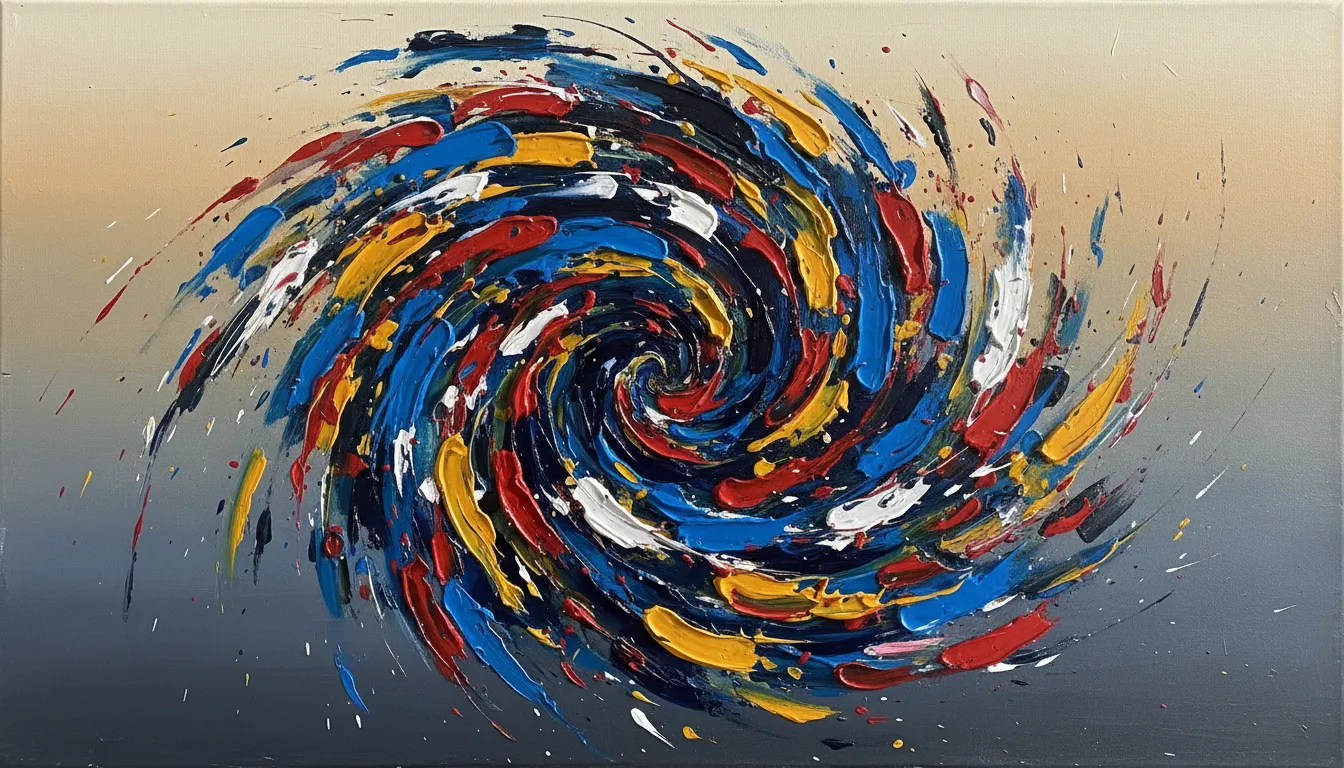
The New York School, a group of artists associated with Abstract Expressionism, revolutionized the art world with their innovative techniques. Action Painting, a style within this movement, involved spontaneous and dynamic gestures, as seen in the works of Jackson Pollock. This approach emphasized the process of creating art, making it a performance in itself.
Key Figures: Pollock, de Kooning, and Rothko
Artists like Jackson Pollock, Willem de Kooning, and Mark Rothko were central to the Abstract Expressionist movement. Each brought their unique style and technique to the forefront.
Techniques and Signature Styles
Pollock’s drip painting technique and de Kooning’s aggressive brushstrokes contrasted with Rothko’s serene color fields. These signature styles not only defined the artists but also the movement as a whole.
Cultural Impact and Legacy
The cultural impact of Abstract Expressionism was profound, shifting the center of the art world to New York. It influenced subsequent movements like Pop Art and Minimalism, cementing its legacy in the history of modern art.
Understanding these abstract styles and their history enriches our appreciation of modern art, highlighting the continuous evolution of artistic expression.
Constructivism, Futurism, and De Stijl
The early 20th century witnessed the emergence of revolutionary art movements that challenged traditional aesthetics. Among these, Constructivism, Futurism, and De Stijl played pivotal roles in shaping the landscape of abstract art. Each movement brought its unique philosophy and innovative techniques, contributing to the rich tapestry of modern art.
Russian Constructivism’s Revolutionary Approach
Russian Constructivism emerged as a response to the 1917 Revolution, seeking to apply art to practical and utilitarian purposes. Artists like Vladimir Tatlin and Alexander Rodchenko focused on constructing art that served the state and society. Their work involved creating functional objects and propaganda materials, embodying the revolutionary spirit.
**
Key principles** included the use of industrial materials, the emphasis on functionality, and the rejection of traditional art forms. This movement significantly influenced the development of abstract art by introducing a new paradigm that prioritized purpose over pure aesthetics.
Italian Futurism: Capturing Movement and Technology
Italian Futurism, led by Umberto Boccioni and Giacomo Balla, celebrated the dynamism of modern life. Futurist artists sought to capture the energy and movement of contemporary technology and urbanization. Their works often depicted speeding cars, industrial landscapes, and the chaos of city life.
The **
Futurist Manifesto**, published in 1909, outlined the movement’s core beliefs, including a fascination with violence, speed, and the machine age. Futurism’s emphasis on kinetic energy and the intersection of art and technology paved the way for future avant-garde movements.
De Stijl and the Quest for Universal Harmony
De Stijl, also known as Neoplasticism, was founded in the Netherlands by Theo van Doesburg and Piet Mondrian. This movement aimed to achieve a universal harmony through the use of basic forms and colors. De Stijl artists believed in simplifying art to its essence, using straight lines, right angles, and primary colors.
Mondrian’s grid-based compositions became iconic representations of De Stijl. The movement’s emphasis on balance and harmony influenced not only visual arts but also architecture and design, promoting a vision of a utopian future.
Surrealism’s Relationship with Abstract Art
Delving into the world of Surrealism, we uncover its profound influence on the evolution of abstract art styles. Surrealism, an art movement that emerged in the 1920s, emphasized the subconscious and the world of dreams, significantly impacting the development of abstract art.
As noted by the renowned artist Andr Breton, “Surrealism is based on the belief in the superior reality of certain forms of previously neglected associations, in the omnipotence of dream, in the disinterested play of thought.” This philosophy paved the way for innovative techniques such as automatic drawing, which allowed artists to tap into their unconscious mind, creating art without deliberate thought.
Automatic Drawing and Unconscious Creation
Automatic drawing was a technique used by Surrealist artists to access their subconscious, allowing for the creation of art that was raw and unfiltered. This method involved drawing or writing without thinking, letting the subconscious guide the creative process. The result was often unexpected and innovative, pushing the boundaries of what was considered “art.” For those interested in exploring this concept further, additional resources are available that delve into the theoretical underpinnings of such creative processes.
The use of automatic drawing not only influenced the development of abstract art but also changed the way artists approached their work. It opened up new possibilities for creative expression, allowing artists to explore new styles and techniques.
Salvador Dal, Joan Mir, and Abstract Elements
Artists like Salvador Dal and Joan Mir were pivotal in incorporating abstract elements into their Surrealist works. Dal’s use of dream-like imagery and Mir’s biomorphic forms contributed significantly to the abstract quality of their art. Their work demonstrated how Surrealism could blend with abstraction, creating a unique visual language that was both personal and innovative.
As Dal once said, “The only difference between a madman and me is that I am not mad.” This quote encapsulates the Surrealist spirit, embracing the irrational and the subconscious as a source of creative power.
In conclusion, Surrealism’s relationship with abstract art is complex and multifaceted, influencing the development of abstract styles through techniques like automatic drawing and the incorporation of abstract elements by artists such as Dal and Mir. Understanding this relationship is crucial for a deeper appreciation of the history of abstract art and the various styles that have emerged over time.
Post-War Abstract Art Movements
In the aftermath of World War II, abstract art underwent a transformation, giving birth to innovative movements that captivated audiences worldwide. The period was characterized by a diverse range of artistic expressions, each contributing to the evolution of abstract art.
Color Field Painting
Color Field Painting emerged as a significant movement in the 1950s and 1960s, characterized by large areas of color that dominated the canvas. Artists like Mark Rothko, Barnett Newman, and Clyfford Still were pivotal in this movement, creating works that were both monumental and introspective.
The use of color in these paintings was not just aesthetic; it was a means to evoke emotions and explore the spiritual potential of art. **
Color Field Painting** thus represented a shift towards a more contemplative and less representational form of abstract art.
Minimalism and Post-Painterly Abstraction
Minimalism and Post-Painterly Abstraction were two movements that further pushed the boundaries of abstract art. Minimalism, led by artists such as Donald Judd and Dan Flavin, focused on simplicity and the elimination of unnecessary elements, often using industrial materials and processes.
Post-Painterly Abstraction, a term coined by art critic Clement Greenberg, referred to a broader trend that included Color Field Painting. It emphasized the physical properties of painting, such as color and canvas, and moved away from the expressive brushwork of earlier abstract art.
| Movement | Key Characteristics | Notable Artists |
|---|---|---|
| --- | --- | --- |
| Color Field Painting | Large areas of color, emotional resonance | Mark Rothko, Barnett Newman |
| Minimalism | Simplicity, industrial materials | Donald Judd, Dan Flavin |
| Post-Painterly Abstraction | Emphasis on color and canvas | Clyfford Still, Helen Frankenthaler |
Op Art, or Optical Art, and Kinetic Art were movements that explored the dynamic potential of abstract art. Op Art used geometric patterns and colors to create optical illusions, while Kinetic Art incorporated movement, often through mechanical means.
Artists like Victor Vasarely and Jesus Rafael Soto were key figures in these movements, creating works that engaged viewers on a new level by manipulating perception and incorporating physical movement.
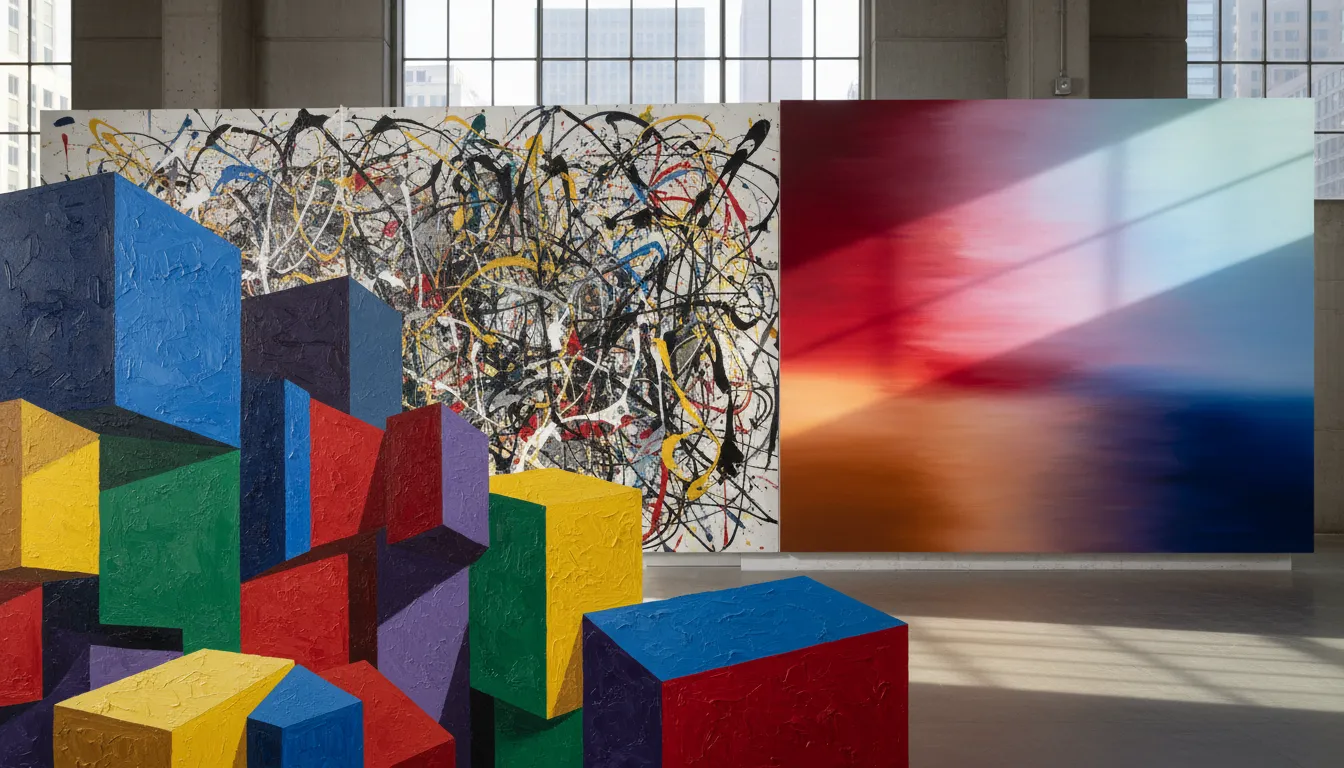 The post-war period was a time of significant innovation in abstract art, with various movements pushing the boundaries of what art could be. From the emotive fields of color to the simplicity of minimalism and the dynamism of Op and Kinetic Art, these movements collectively enriched the landscape of modern art.
Understanding the Language of Abstract Art
To grasp the essence of abstract art, one must first understand its language, which is rooted in composition, color, and form. Abstract art communicates through a unique visual dialect that is both personal and universal.
Elements of Composition: Line, Color, and Form
The elements of composition are the building blocks of abstract art. **
Lines* can be bold, gestural, or subtle, guiding the viewer’s eye through the artwork. Colors evoke emotions and moods, ranging from vibrant and energetic to muted and contemplative. Forms*, whether geometric or organic, add depth and complexity to the composition. For a deeper dive into the definition of abstract art, visit Artsper’s guide.
Interpreting Meaning in Non-Representational Works
Interpreting abstract art involves understanding that its meaning can be highly subjective. The absence of representational imagery means that viewers must engage with the artwork on a more intuitive level.
The Role of Titles in Abstract Works
Titles can provide insight into the artist’s inspiration or intention behind the work. They can be literal, metaphorical, or sometimes even ironic, adding another layer of meaning to the artwork.
The Artist’s Intent vs. Viewer’s Interpretation
While the artist’s intent is a crucial aspect of creating abstract art, the viewer’s interpretation is equally important. Abstract art encourages a personal connection, allowing viewers to bring their own experiences and emotions to the interpretation.
Understanding the language of abstract art enhances our appreciation and enjoyment of this complex and multifaceted art form. By engaging with its elements and embracing its subjectivity, we can deepen our connection to abstract art.
How to Appreciate Abstract Art as a Beginner
Understanding abstract art is not about deciphering a hidden message, but rather about embracing the emotions and sensations it evokes. As a beginner, appreciating abstract art requires an open mind and a willingness to explore its unique visual language.
Approaching Abstract Works with an Open Mind
When viewing abstract art, it’s essential to let go of preconceived notions about what art should look like. **
Abstract art movements** have evolved over time, influenced by various cultural and historical contexts. By approaching these works with an open mind, you can begin to appreciate the diverse styles and techniques employed by artists.
Questions to Ask When Viewing Abstract Art
To deepen your understanding, ask questions like: What emotions does the artwork evoke? How does the artist use color, texture, and form to create a visual experience? Considering these questions can enhance your appreciation of abstract art and encourage a more personal connection with the work.
Resources for Further Learning
For those looking to further their understanding of abstract art, numerous resources are available. Books on abstract art movements, online courses, and museum exhibitions can provide valuable insights into the history and techniques behind abstract art. Engaging with these resources can enrich your appreciation and foster a deeper connection with abstract art.
Collecting and Investing in Abstract Art
Abstract art, with its rich history and diverse movements, presents a unique landscape for collectors. Understanding the overview of abstract art and its history of abstract art can significantly enhance one’s ability to navigate the market and make informed decisions.
Starting a Collection on Any Budget
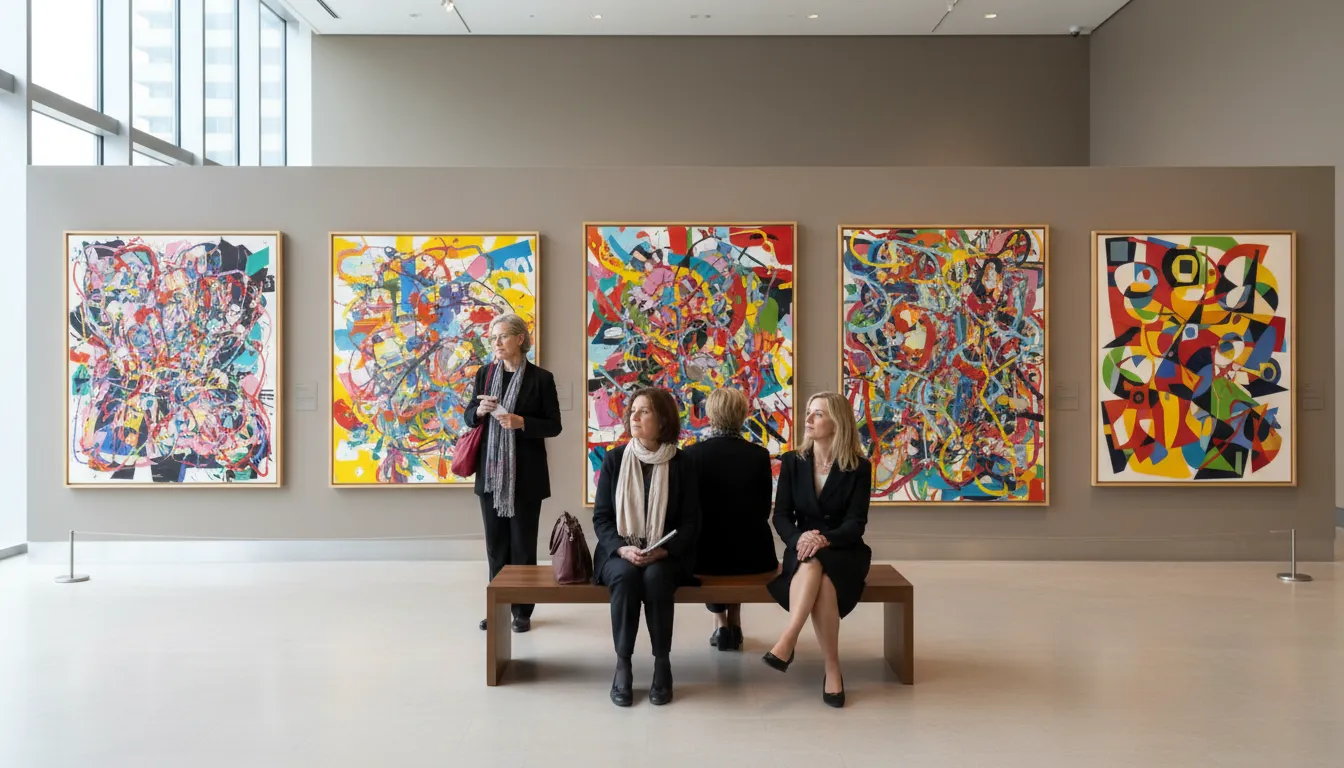
Beginning an abstract art collection doesn’t require a substantial budget. For those new to collecting, starting with emerging artists or prints can be a cost-effective entry point. It’s also beneficial to explore local art fairs, galleries, and online platforms. For more information on abstract art, you can visit this resource to deepen your understanding.
Recognizing Value and Potential in Abstract Works
When evaluating abstract art, several factors come into play, including the artist’s reputation, the piece’s condition, and its rarity. The table below outlines key considerations for assessing the value of abstract art pieces.
| Factor | Description | Importance Level |
|---|---|---|
| --- | --- | --- |
| Artist’s Reputation | The artist’s standing in the art community and their historical significance. | High |
| Condition of the Piece | The physical state of the artwork, including any damage or restoration. | High |
| Rarity | How unique or scarce the piece is within the artist’s oeuvre or the market. | Medium |
| Provenance | The history of ownership, which can impact the piece’s value and authenticity. | High |
Conclusion: The Enduring Impact of Abstract Art Movements
Abstract art movements have revolutionized the way we perceive and interact with art, leaving a lasting legacy on modern and contemporary art. By understanding abstract styles, we can unlock the emotional and expressive qualities that these artworks embody.
The journey through the history of abstract art has revealed the pioneering spirits of artists like Wassily Kandinsky and Kazimir Malevich, who dared to break away from representational art. Their innovations paved the way for a diverse range of abstract art movements, from Cubism and Expressionism to Surrealism and beyond.
As we continue to navigate the complexities of the modern art world, appreciating abstract art becomes increasingly important. By recognizing the significance of abstract art movements, we can deepen our understanding of the artistic expressions that shape our culture.
Whether you’re a seasoned art enthusiast or just beginning to explore the world of abstract art, the key to understanding abstract styles lies in embracing their unique qualities and the emotions they evoke.
FAQ
What is abstract art, and how does it differ from representational art?
Abstract art is a style of art that doesn’t depict realistic images. Instead, it uses colors, shapes, and forms to create a composition that may evoke emotions or convey ideas. Unlike representational art, which aims to accurately represent the world, abstract art focuses on expressing feelings or concepts through non-representational means.### What are some of the major abstract art movements?
Some of the most influential abstract art movements include Abstract Expressionism, Cubism, Surrealism, Futurism, De Stijl, and Color Field Painting. Each of these movements contributed to the evolution of abstract art, pushing the boundaries of what was considered “art” and exploring new ways to express emotions and ideas.### Who are some pioneers of abstract art?
Wassily Kandinsky, Kazimir Malevich, and Jackson Pollock are just a few of the artists who played a crucial role in shaping the development of abstract art. Kandinsky is often credited with creating the first purely abstract works, while Malevich founded the Suprematist movement. Pollock, on the other hand, was a key figure in Abstract Expressionism, known for his innovative drip painting technique.### How do I start understanding and appreciating abstract art?
To appreciate abstract art, start by approaching it with an open mind. Look at the composition, colors, and textures, and consider the emotions or ideas the piece might evoke. You can also research the artist’s background and the historical context in which the work was created to gain a deeper understanding.### What are some key elements to consider when interpreting abstract art?
When interpreting abstract art, consider the elements of composition, such as line, color, and form. Think about how these elements interact and contribute to the overall effect of the piece. You can also consider the title of the work, the artist’s statement, and the cultural context to gain a deeper understanding.### Can abstract art be considered an investment?
Yes, abstract art can be considered an investment, but it’s essential to approach it with a clear understanding of the art market and the factors that influence the value of art. Research the artist, the artwork’s condition, and its provenance to make an informed decision. It’s also crucial to consider your budget and personal taste when collecting abstract art.### How do I start collecting abstract art on a budget?
To start collecting abstract art on a budget, consider buying works by emerging artists or exploring local art fairs and online platforms. You can also look into purchasing prints or smaller pieces, which can be more affordable than large-scale works. Research the artist and the artwork’s value to ensure you’re making a smart investment.### What is the significance of abstract art in modern culture?
Abstract art has had a profound impact on modern culture, influencing not only the art world but also design, music, and literature. Its emphasis on expressing emotions and ideas through non-representational means has opened up new avenues for creative expression and continues to inspire artists and audiences alike.